Operational Memory

Why our work compounds after the first workflow goes live.

SynthWeave is built around a simple idea: AI gets more useful when the business can preserve the context, decisions, constraints, and workflow logic that normally disappear across people and systems.

Talk Through Your Operating Model See the Services Page

Most automation does not accumulate.

A team automates a task, saves some time, and then starts over on the next workflow. The logic is trapped in prompts, one person's head, or a brittle implementation that does not transfer well. That is why many AI efforts stall after isolated wins.

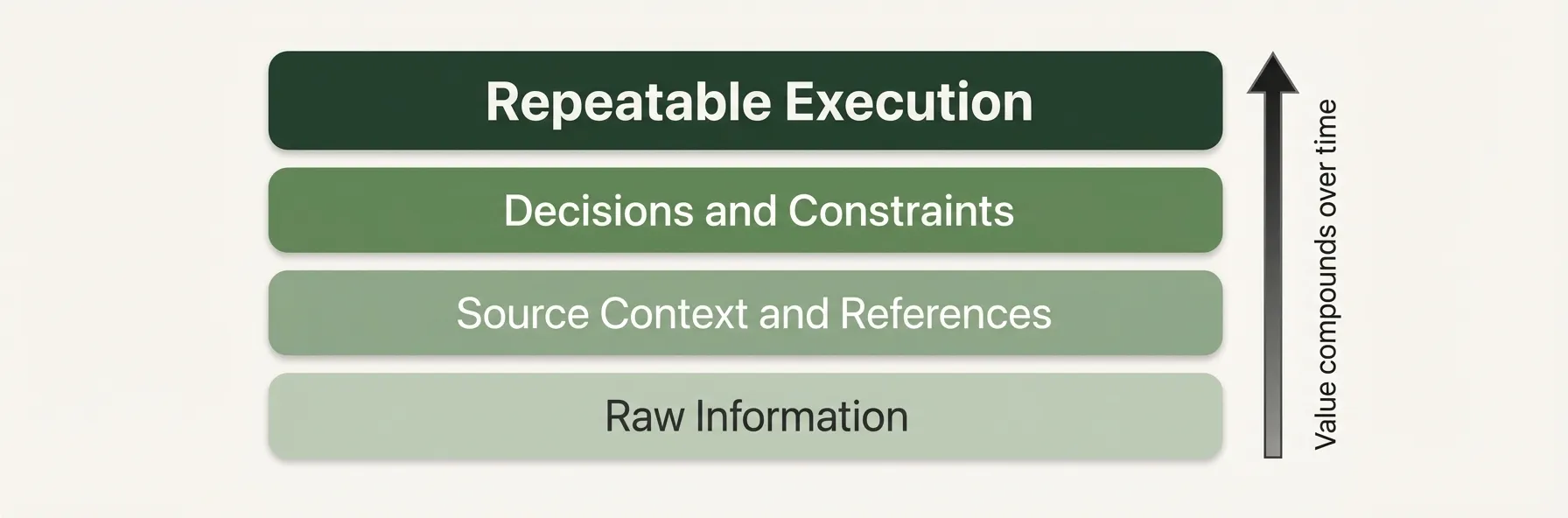
Operational memory is the layer between raw information and repeatable execution.

It captures what the workflow depends on:

Operational memory layers: Raw Information → Source Context → Decisions and Constraints → Repeatable Execution
Each layer builds on the last — value compounds over time.

What changes when the workflow can remember

Every workflow you fix makes the next one easier.

Each engagement solves a real workflow problem. It also builds a reusable structure around the context, rules, decisions, and execution logic your team depends on. That foundation carries forward — so the second workflow ships faster than the first, and the third faster still.

If you are trying to make AI useful across a team, the memory layer is usually the missing piece.